
John Wiley & Sons · 2013
xVA: Credit
Funding and Capital Valuation Adjustments: A Continuing Challenge for Global Financial Markets
Level · Practitioner
Editorial summary
xVA: Credit provides an in-depth exploration of funding and capital valuation adjustments, focusing on their implications within credit derivatives. This title is positioned alongside other practitioner-grade texts on risk management and quantitative methods, making it a valuable addition for professionals in finance. The authors, Damiano Brigo and colleagues, delve into the intricacies of xVA, offering insights into the regulatory and compliance challenges that arise in modern financial markets.
The book covers a range of quantitative methods relevant to credit and funding, equipping readers with the analytical tools necessary to assess and manage valuation adjustments effectively. It addresses the ongoing challenges faced by traders, risk managers, and fund managers, providing practical frameworks and methodologies that can be applied in real-world scenarios. The text is designed for practitioners, ensuring that the content is accessible yet rigorous enough to meet the demands of the industry.
With a focus on the interplay between funding, capital, and credit risk, this volume is particularly relevant for those involved in risk management and regulatory compliance. It discusses the evolving landscape of financial markets and the importance of understanding xVA in the context of broader market dynamics. Readers can expect to gain a solid grounding in the principles of xVA, as well as insights into its application in various financial instruments.
While the book offers a comprehensive overview, potential readers should note that the depth of coverage on specific quantitative methods may vary. However, the foundational concepts presented are essential for anyone looking to enhance their understanding of credit derivatives and their valuation challenges.
Overall, xVA: Credit is a critical resource for finance professionals seeking to navigate the complexities of funding and capital valuation adjustments in today's global financial markets.
About this book
xVA: Credit is a detailed examination of funding and capital valuation adjustments within the framework of credit derivatives. The book is structured to provide a thorough understanding of the xVA landscape, addressing both theoretical foundations and practical applications. It is aimed at practitioners in the financial sector, particularly those involved in risk management, trading, and quantitative analysis.
The authors, Damiano Brigo et al., explore the various components of xVA, including the regulatory implications and compliance challenges that financial institutions face. The text delves into quantitative methods that are essential for evaluating credit risk and funding costs, equipping readers with the necessary tools to navigate the complexities of valuation adjustments. This focus on quantitative analysis is particularly beneficial for those in roles such as quant analysts and risk managers.
Readers can expect to engage with a range of topics, including the impact of market conditions on credit derivatives and the methodologies used to calculate xVA. The book emphasizes the importance of understanding the interplay between funding, capital, and credit risk, providing a comprehensive overview that is relevant to current market practices. It also highlights the ongoing challenges in the field, making it a timely resource for professionals.
Competency gained from this volume includes a robust understanding of xVA principles, the ability to apply quantitative methods to real-world scenarios, and insights into the regulatory landscape affecting credit derivatives. This knowledge is crucial for making informed decisions in trading and risk management contexts, ensuring that professionals are well-prepared to tackle the challenges of modern financial markets.
Why it matters
Understanding funding and capital valuation adjustments (xVA) is crucial for managing risk limits, pricing strategies, and compliance within financial institutions. This book provides the analytical frameworks necessary for professionals to navigate these complexities, ensuring that they can effectively assess and manage credit risk in their operations.
Best for
This book is best suited for traders, risk managers, quants, and fund managers looking to deepen their understanding of credit derivatives and valuation adjustments. It is particularly valuable for those involved in regulatory compliance and risk assessment.
Not ideal for
This title may not be ideal for beginners in finance or those seeking a general overview of financial markets, as it is tailored for practitioners with a foundational understanding of quantitative methods and risk management.
Key themes
credit-derivatives|funding|capital-valuation|risk-management|quantitative-methods|regulation|compliance|valuation-adjustments|financial-markets
Strengths
xVA: Credit offers a comprehensive and detailed exploration of funding and capital valuation adjustments, making it a critical resource for finance professionals. The authors provide a strong theoretical foundation while also addressing practical applications, ensuring that readers can apply the concepts in real-world scenarios. The focus on quantitative methods enhances the book's utility for practitioners, particularly those in risk management and trading roles. Additionally, the text addresses the regulatory challenges faced by financial institutions, making it relevant in today's evolving market landscape.
Limitations
While the book provides a thorough overview of xVA and its implications, the depth of coverage on specific quantitative methods may vary, which could limit its utility for readers seeking advanced technical detail. Additionally, the focus on practitioner-level content means that those without a foundational understanding of finance may find some sections challenging. As such, the book is best suited for professionals already familiar with the basics of credit derivatives and risk management.
Related books
Shared topics with this title.
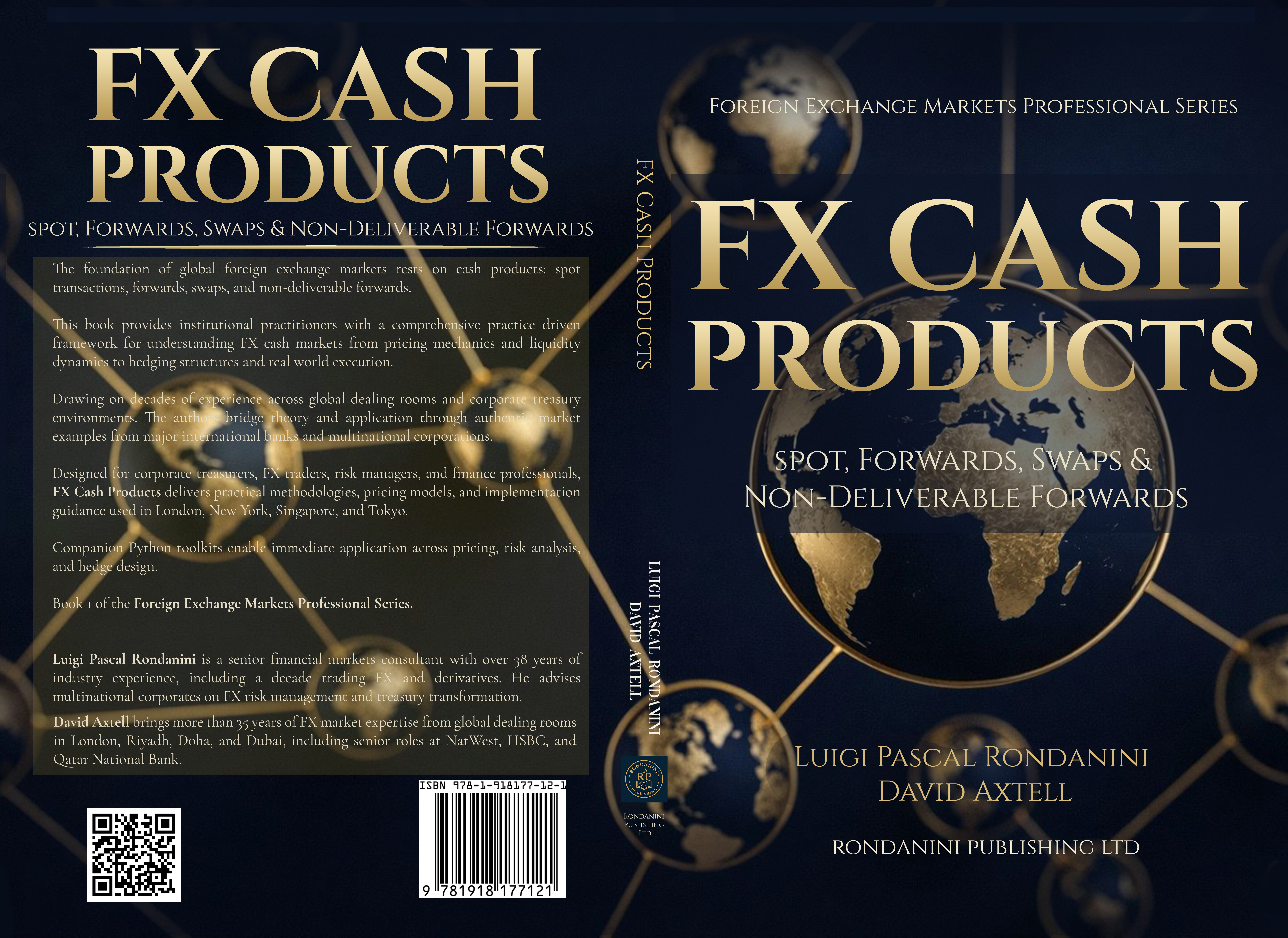
FX Cash Products: Spot, Forwards, Swaps & Non-Deliverable Forwards
Practitioner guide for treasury and markets
Luigi Pascal Rondanini · David Axtell · 2026 · Rondanini
Spot, forwards, swaps, and NDFs for corporate treasurers, traders, and risk managers—operations-first, institutionally framed.
- FX
- Treasury
- Risk management

Modern Computational Finance
Scripting for Derivatives and xVA
Antoine Savine · Jesper Andreasen · 2021 · John Wiley & Sons
Second volume: building professional derivative scripting systems—cash-flow representation, branching, American Monte Carlo hooks, and how scripting supports xVA-style portfolio interrogation. Written for quant devs and library architects who must ship maintainable payoff DSLs.
- Derivatives
- Quantitative finance
- Risk management

Options, Futures, and Other Derivatives
Global edition
John C. Hull · 2021 · Pearson
The standard graduate-level derivatives text.
- Derivatives
- Risk management
- Quantitative finance

Cybersecurity in Financial Services: Frameworks and Best Practices
Kevin Mandia · 2018 · John Wiley & Sons
This comprehensive guide addresses the critical intersection of cybersecurity and financial services, offering frameworks and best practices essential for risk managers and technology professionals. It outlines strategies to mitigate risks associated with cyber threats in the financial sector.
- Risk management
- Technology
- Regulation & compliance