
Federal Reserve · 2009
Stress Testing and Scenario Analysis: Applications to Financial Markets
Level · Intermediate
Editorial summary
Stress Testing and Scenario Analysis: Applications to Financial Markets by Daniel Tarullo is a pivotal resource for professionals engaged in risk management and regulatory compliance. This work stands out on the shelf as it delves into the practical applications of stress testing and scenario analysis, providing insights that are particularly relevant in the context of evolving regulatory landscapes. The book navigates through various methodologies, illustrating how these techniques can be employed to assess potential vulnerabilities within financial institutions.
Readers will find that the book is structured to facilitate an understanding of both theoretical concepts and practical applications. It covers the essential components of stress testing, including the design of scenarios, the selection of risk factors, and the interpretation of results. The text is rich with examples and case studies that demonstrate the real-world implications of stress testing in financial markets, making it an invaluable guide for risk managers and compliance officers.
The level of mathematical detail is intermediate, making the content accessible to practitioners who may not have an extensive quantitative background but possess a foundational understanding of financial principles. This balance allows risk teams to engage with the material effectively, applying the concepts to their own risk assessment frameworks and regulatory reporting obligations.
Furthermore, the book addresses the critical role of stress testing in regulatory compliance, particularly in light of recent financial crises that have underscored the need for robust risk management practices. It serves as a guide for regulators and compliance professionals who must ensure that financial institutions are adequately prepared for adverse scenarios.
While the book is comprehensive, it may not cover the latest developments in stress testing methodologies post-2009, which could limit its applicability in rapidly evolving regulatory environments. However, the foundational principles and frameworks discussed remain relevant for understanding the core aspects of stress testing in financial markets.
About this book
Stress Testing and Scenario Analysis: Applications to Financial Markets is structured to provide a thorough exploration of the methodologies and regulatory implications of stress testing within the financial sector. The book begins by defining stress testing and scenario analysis, outlining their importance in identifying potential risks that financial institutions may face. It then progresses to discuss the various types of stress tests, including sensitivity analyses and adverse scenario assessments, and how these can be tailored to meet the specific needs of different institutions.
The core technical ideas presented in the book focus on the design and implementation of stress testing frameworks. Tarullo emphasizes the importance of selecting appropriate scenarios and risk factors, which are critical for accurately assessing the resilience of financial institutions. The book also delves into the interpretation of stress testing results, providing insights on how these findings can inform risk management strategies and regulatory compliance efforts.
Prerequisites for readers include a basic understanding of financial instruments and risk management principles, as the book assumes familiarity with key concepts in finance. Readers can expect to gain competency in developing and applying stress testing methodologies, as well as understanding their regulatory implications. The practical examples and case studies included throughout the text serve to reinforce these concepts and demonstrate their application in real-world settings.
Overall, the book is an essential resource for risk managers, compliance professionals, and regulators seeking to enhance their understanding of stress testing and scenario analysis. It provides a solid foundation for implementing effective risk management practices that align with regulatory expectations.
Why it matters
Understanding stress testing and scenario analysis is crucial for maintaining effective risk limits and ensuring compliance with regulatory frameworks. As financial markets continue to evolve, the ability to anticipate and mitigate potential risks through robust stress testing practices becomes increasingly important for risk managers and compliance teams.
Best for
This book is best suited for risk managers, compliance officers, and regulators who are looking to deepen their understanding of stress testing methodologies and their applications in financial markets. It is also valuable for professionals involved in regulatory reporting and risk assessment.
Not ideal for
It may not be ideal for beginners in finance or those without a foundational understanding of risk management principles, as the book assumes a certain level of prior knowledge. Additionally, practitioners seeking the latest advancements in stress testing methodologies may find the content somewhat dated.
Key themes
stress-testing|scenario-analysis|risk-management|regulation|financial-institutions|compliance|methodologies|case-studies|risk-assessment|regulatory-frameworks
Strengths
One of the key strengths of this book is its practical approach to stress testing and scenario analysis, providing readers with actionable insights and methodologies that can be directly applied in their roles. The inclusion of real-world examples and case studies enhances the reader's understanding of how these concepts operate in practice, making it a valuable resource for professionals in the field. Furthermore, the book's focus on regulatory implications ensures that readers are aware of the compliance aspects associated with stress testing, which is critical in today's financial environment.
Limitations
A notable limitation of the book is its publication date, which may affect its relevance in light of the rapidly changing landscape of financial regulation and risk management practices. As the field continues to evolve, some methodologies and regulatory expectations discussed may no longer reflect current best practices. Additionally, the intermediate reading level may pose challenges for those without a strong background in finance, potentially limiting its accessibility to a broader audience.
Related books
Shared topics with this title.
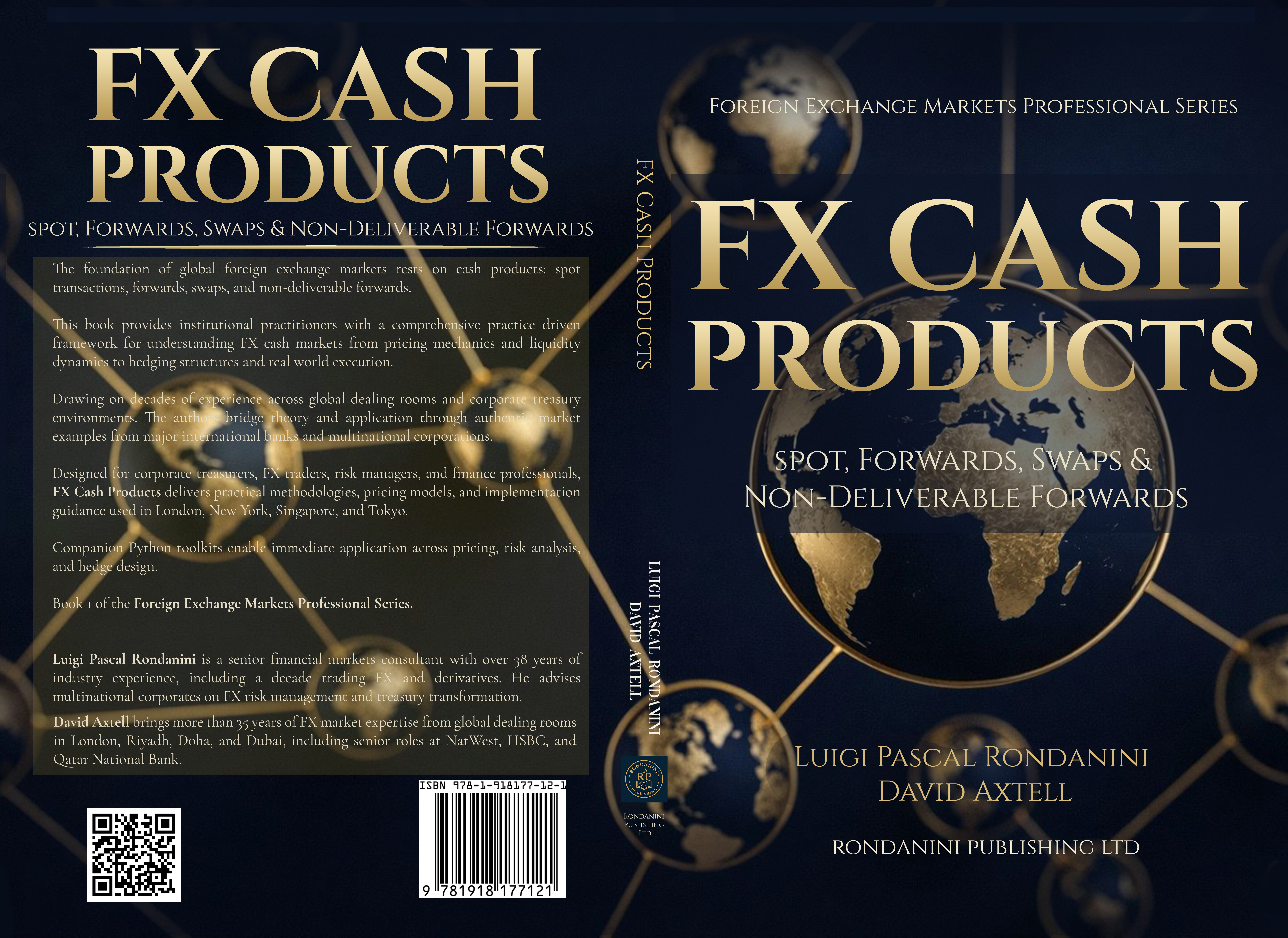
FX Cash Products: Spot, Forwards, Swaps & Non-Deliverable Forwards
Practitioner guide for treasury and markets
Luigi Pascal Rondanini · David Axtell · 2026 · Rondanini
Spot, forwards, swaps, and NDFs for corporate treasurers, traders, and risk managers—operations-first, institutionally framed.
- FX
- Treasury
- Risk management

Modern Computational Finance
Scripting for Derivatives and xVA
Antoine Savine · Jesper Andreasen · 2021 · John Wiley & Sons
Second volume: building professional derivative scripting systems—cash-flow representation, branching, American Monte Carlo hooks, and how scripting supports xVA-style portfolio interrogation. Written for quant devs and library architects who must ship maintainable payoff DSLs.
- Derivatives
- Quantitative finance
- Risk management

Options, Futures, and Other Derivatives
Global edition
John C. Hull · 2021 · Pearson
The standard graduate-level derivatives text.
- Derivatives
- Risk management
- Quantitative finance

Green Bonds: A Guide to Issuance and Management
Finn Kuzmiak · 2019 · John Wiley & Sons
This guide provides a comprehensive overview of green bond issuance and management, focusing on regulatory frameworks and market practices. It is designed for finance professionals seeking to understand the intricacies of fixed income instruments aimed at funding environmentally sustainable projects.
- Fixed income
- Regulation