
John Wiley & Sons · 2001
Operational Risk: Measurement and Modelling
Level · Institutional / advanced
Editorial summary
Operational Risk: Measurement and Modelling by Jack L. King is a comprehensive resource that addresses the critical area of operational risk within financial institutions. This text positions itself as a foundational work in the field, focusing on measurement and modelling techniques essential for effective risk management. It introduces the Delta-EVT technique, a novel approach that integrates existing methods for a thorough assessment of operational risk loss.
The book is structured to guide readers through both theoretical concepts and practical applications, making it suitable for risk managers and students alike. It offers step-by-step descriptions and real-world examples, which facilitate the understanding of complex risk measures and the construction of causal models using Bayesian networks. This hands-on approach ensures that readers can apply the concepts learned to their own risk management practices.
With a reading level set at an institutional standard, the text delves into the mathematical models and regulatory frameworks that underpin operational risk management. It provides a solid foundation for understanding the historical context and motivations for addressing operational risk, making it a valuable addition to the library of any professional in the field.
Risk teams, treasury operations, and compliance professionals will find this book particularly useful as it equips them with the tools necessary to measure, manage, and mitigate operational risk effectively. The integration of practical examples with theoretical underpinnings enhances its applicability in real-world scenarios.
However, the evidence provided is somewhat limited, focusing primarily on the measurement techniques without extensive coverage of broader regulatory implications or case studies. Readers seeking a more comprehensive exploration of operational risk may need to supplement this text with additional resources.
About this book
Operational Risk: Measurement and Modelling serves as a foundational text for understanding and addressing operational risk in financial institutions. Authored by Jack L. King, this book provides a detailed exploration of measurement and modelling techniques that are crucial for effective risk management. The text is structured to facilitate both theoretical understanding and practical application, making it suitable for risk managers and students in the field.
The book introduces the Delta-EVT technique, a new method that combines existing approaches to provide a comprehensive measurement of operational risk loss. This innovative technique is presented alongside a variety of mathematical models and frameworks that underpin operational risk management. Readers will find comprehensive step-by-step descriptions that guide them through the calculation of common risk measures and the development of causal models using Bayesian networks.
In addition to the technical content, the book offers background information on the history and motivations for addressing operational risk, providing context for its importance in the financial sector. The integration of real-world examples enhances the learning experience, allowing readers to see how theoretical concepts are applied in practice.
Competency gained from this text includes a solid understanding of operational risk measurement techniques, the ability to construct and analyse causal models, and insights into the regulatory landscape surrounding operational risk. This makes it an essential resource for professionals looking to enhance their risk management practices.
While the book is rich in technical detail, it may not cover all aspects of operational risk comprehensively, particularly in terms of broader regulatory implications or extensive case studies. Readers may need to seek additional resources to gain a more rounded perspective on operational risk management.
Why it matters
Operational Risk: Measurement and Modelling is critical for professionals involved in risk management, as it provides essential tools and techniques for measuring and mitigating operational risk. Understanding these concepts is vital for maintaining compliance with regulatory standards and for minimising financial waste within institutions. The methodologies presented can directly impact workflows related to risk limits, pricing, and overall risk strategy.
Best for
This book is best suited for risk managers and students seeking to deepen their understanding of operational risk measurement and modelling techniques. It is particularly valuable for those involved in financial institutions and regulatory compliance.
Not ideal for
It may not be ideal for practitioners looking for extensive case studies or broader discussions on operational risk beyond measurement and modelling techniques.
Key themes
operational-risk|measurement|modelling|delta-evt|bayesian-networks|risk-management|regulation|financial-institutions|mathematical-models|case-studies
Strengths
One of the key strengths of this book is its focus on practical applications of operational risk measurement techniques. The introduction of the Delta-EVT method provides a novel approach that can enhance the accuracy of risk assessments. Additionally, the step-by-step descriptions and real-world examples make complex concepts more accessible, allowing readers to apply the knowledge gained directly to their professional practices. The integration of theoretical and practical material ensures a well-rounded understanding of the subject matter.
Limitations
Despite its strengths, the book has limitations in terms of the breadth of its coverage. It primarily focuses on measurement techniques and may not delve deeply into the regulatory implications or broader operational risk management strategies. The lack of extensive case studies may also limit its applicability for readers seeking comprehensive insights into real-world applications of operational risk management. As such, it may be necessary for readers to consult additional resources to gain a more holistic view of the operational risk landscape.
Related books
Shared topics with this title.
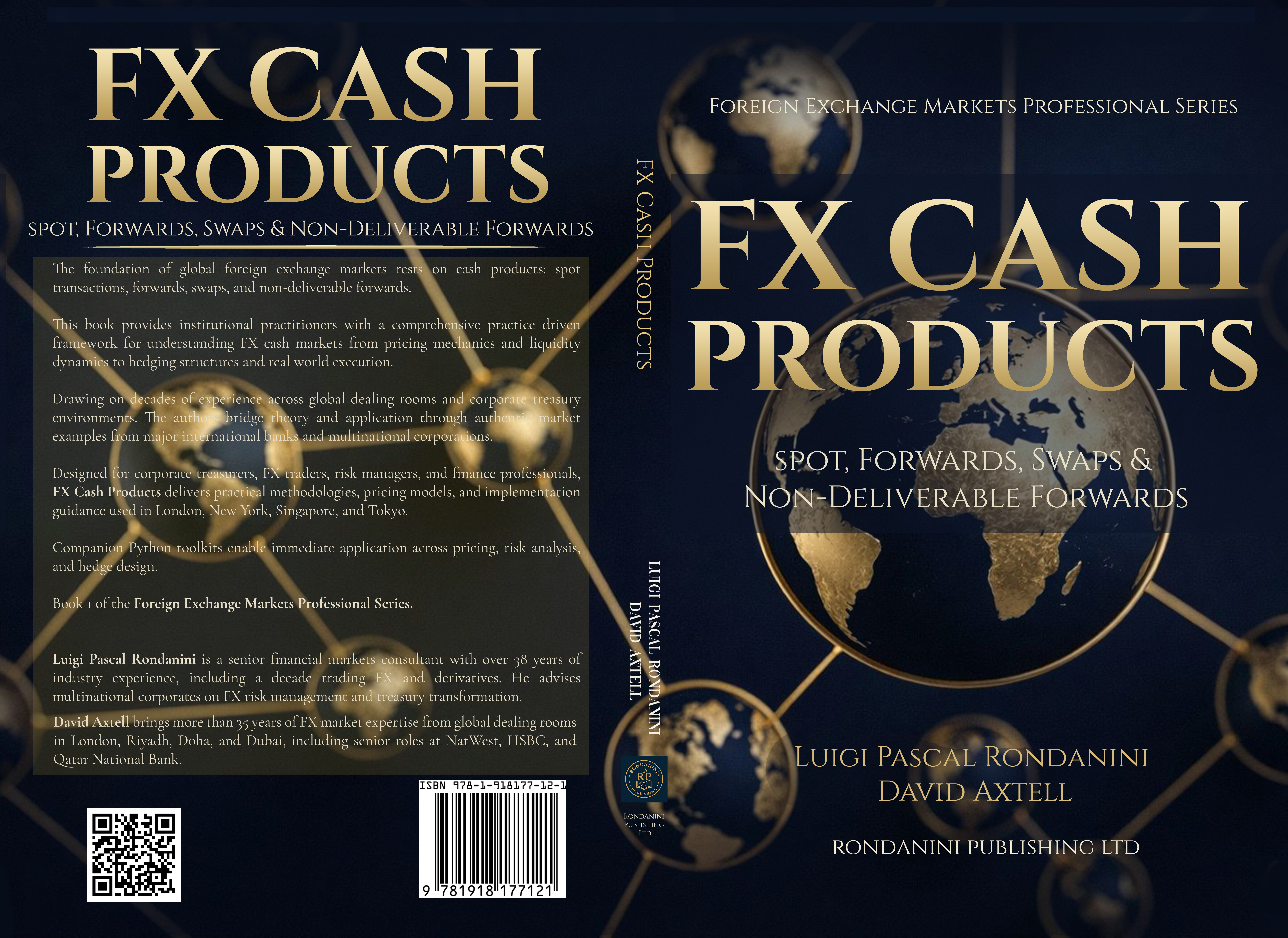
FX Cash Products: Spot, Forwards, Swaps & Non-Deliverable Forwards
Practitioner guide for treasury and markets
Luigi Pascal Rondanini · David Axtell · 2026 · Rondanini
Spot, forwards, swaps, and NDFs for corporate treasurers, traders, and risk managers—operations-first, institutionally framed.
- FX
- Treasury
- Risk management

Modern Computational Finance
Scripting for Derivatives and xVA
Antoine Savine · Jesper Andreasen · 2021 · John Wiley & Sons
Second volume: building professional derivative scripting systems—cash-flow representation, branching, American Monte Carlo hooks, and how scripting supports xVA-style portfolio interrogation. Written for quant devs and library architects who must ship maintainable payoff DSLs.
- Derivatives
- Quantitative finance
- Risk management

Options, Futures, and Other Derivatives
Global edition
John C. Hull · 2021 · Pearson
The standard graduate-level derivatives text.
- Derivatives
- Risk management
- Quantitative finance

Cybersecurity in Financial Services: Frameworks and Best Practices
Kevin Mandia · 2018 · John Wiley & Sons
This comprehensive guide addresses the critical intersection of cybersecurity and financial services, offering frameworks and best practices essential for risk managers and technology professionals. It outlines strategies to mitigate risks associated with cyber threats in the financial sector.
- Risk management
- Technology
- Regulation & compliance