
Federal Reserve · 2014
High-Frequency Trading in FX: Evidence from EU High-Frequency Data
Level · Practitioner
Editorial summary
High-Frequency Trading in FX: Evidence from EU High-Frequency Data positions itself as a critical resource for understanding the dynamics of high-frequency trading within the foreign exchange market. Unlike adjacent titles that may focus on broader trading strategies or theoretical frameworks, this work zeroes in on empirical data derived from the European market, making it particularly relevant for practitioners engaged in FX trading.
The authors, Chaboud et al., meticulously explore various aspects of market microstructure influenced by high-frequency trading, such as liquidity, price formation, and volatility. The book is structured to guide readers through the analysis of high-frequency data, employing statistical methods and empirical evidence to support their findings. This approach allows for a nuanced understanding of how HFT strategies operate within the FX landscape.
Readers can expect a moderate level of mathematical detail, with a focus on quantitative analysis and empirical validation of trading strategies. The book serves as a practical guide for traders and technologists, providing them with tools to interpret high-frequency data and its implications for trading decisions and market behaviour.
Desk and treasury teams would find this book particularly useful in refining their trading strategies and understanding the competitive landscape shaped by HFT. The insights gained could inform risk management practices and trading algorithms, ultimately enhancing decision-making processes in fast-paced trading environments.
While the book presents a wealth of information, it is essential to note that the evidence and conclusions drawn are specific to the EU context, which may limit its applicability to other markets. Readers should approach the findings with an understanding of regional market differences.
About this book
High-Frequency Trading in FX: Evidence from EU High-Frequency Data is structured to provide a comprehensive examination of the impact of high-frequency trading on the foreign exchange market, utilising a robust dataset from the European Union. The authors delve into the intricacies of market microstructure, exploring how HFT alters traditional trading dynamics and influences liquidity and price discovery processes.
The book is divided into sections that systematically address key themes in high-frequency trading, including the statistical methodologies employed to analyse market data, the implications of HFT on market efficiency, and the regulatory considerations surrounding this trading style. Readers will find detailed discussions on the role of technology in facilitating high-frequency trading and the resultant effects on market participants.
Prerequisites for readers include a foundational understanding of financial markets and basic statistical concepts, as the authors employ quantitative techniques to analyse the high-frequency data. The book aims to equip practitioners with the analytical skills necessary to interpret and leverage high-frequency trading data effectively.
By the end of the book, readers should expect to gain a nuanced understanding of how high-frequency trading operates within the FX market, the associated risks, and the potential for strategic advantages. This competency is crucial for traders and technologists seeking to navigate the complexities of modern trading environments influenced by rapid technological advancements.
Why it matters
The insights provided in this book are vital for market professionals involved in FX trading, as they directly relate to live workflows concerning pricing strategies, risk management, and compliance with evolving market regulations. Understanding the dynamics of high-frequency trading is essential for optimising trading performance and maintaining competitive advantage in a rapidly changing market landscape.
Best for
This book is best suited for FX traders, quantitative analysts, and technologists who are looking to deepen their understanding of high-frequency trading and its implications on market microstructure. It is particularly relevant for those involved in algorithmic trading and risk assessment in the foreign exchange domain.
Not ideal for
It may not be ideal for readers seeking a broad overview of trading strategies or those without a foundational knowledge of financial markets and statistical analysis, as the book assumes a certain level of expertise in these areas.
Key themes
high-frequency-trading|foreign-exchange|market-microstructure|empirical-analysis|quantitative-methods|liquidity|price-discovery|trading-strategies|regulatory-considerations
Strengths
One of the key strengths of this book is its empirical approach, grounded in extensive high-frequency data from the EU market, which provides readers with concrete evidence and case studies. The focus on market microstructure offers a detailed examination of how HFT influences trading dynamics, making it a valuable resource for practitioners looking to understand these complex interactions. Additionally, the authors' expertise in the field lends credibility to the findings and analyses presented throughout the text.
Limitations
However, a notable limitation is the book's specific focus on the EU market, which may not fully translate to other geographical contexts where market structures and regulatory environments differ significantly. Furthermore, while the book provides valuable insights, some readers may find the level of mathematical detail challenging if they do not possess a strong background in quantitative analysis. This could restrict accessibility for a broader audience interested in high-frequency trading.
Related books
Shared topics with this title.
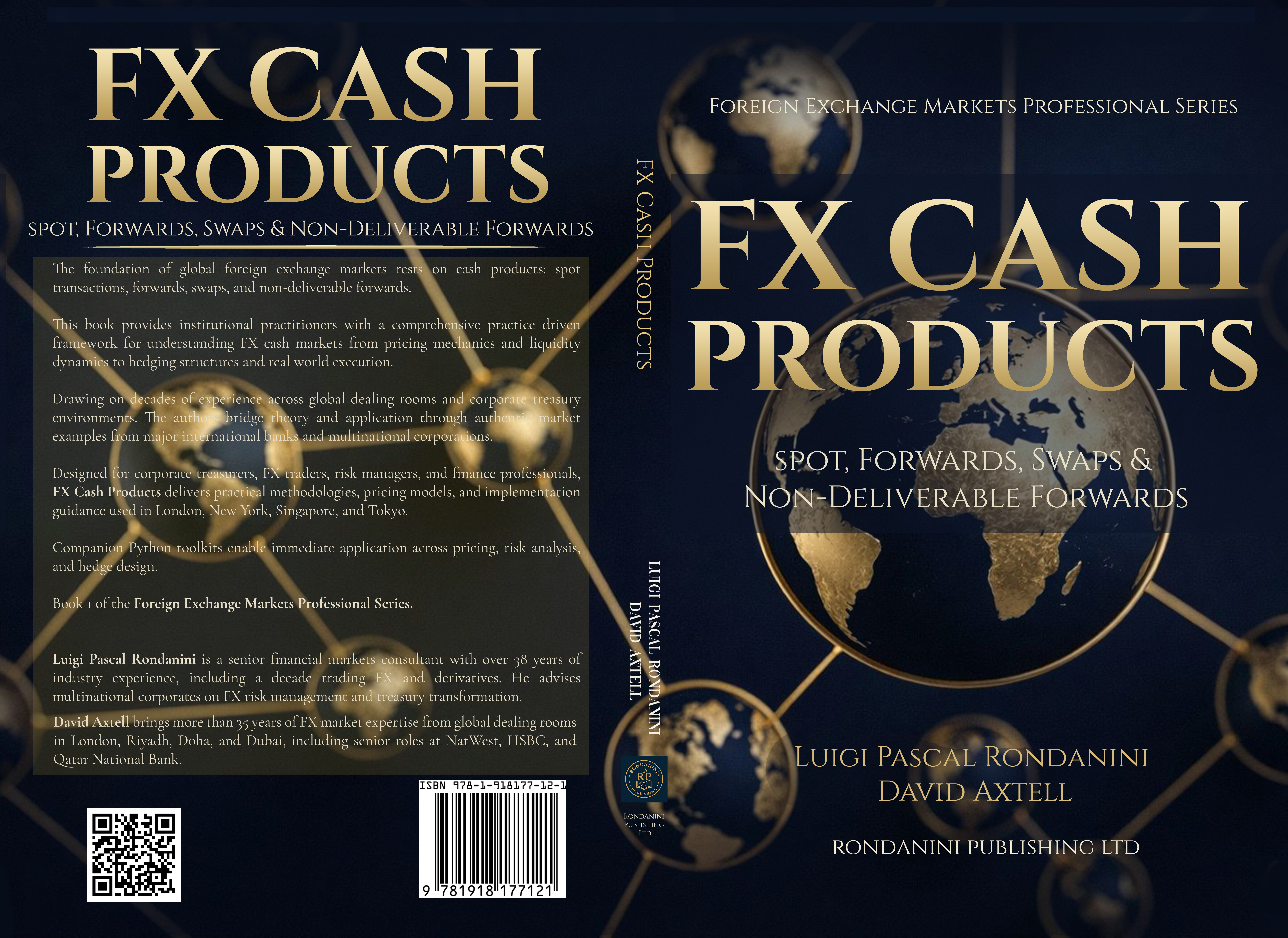
FX Cash Products: Spot, Forwards, Swaps & Non-Deliverable Forwards
Practitioner guide for treasury and markets
Luigi Pascal Rondanini · David Axtell · 2026 · Rondanini
Spot, forwards, swaps, and NDFs for corporate treasurers, traders, and risk managers—operations-first, institutionally framed.
- FX
- Treasury
- Risk management

FX Essentials: Spot, Forwards, Swaps and Non-Deliverable Forwards
Shani Shamah · 2018 · John Wiley & Sons
FX Essentials provides a comprehensive introduction to the fundamental concepts of foreign exchange markets, including spot transactions, forwards, swaps, and non-deliverable forwards. It is designed for professionals seeking to understand the mechanics and applications of FX instruments within treasury operations.
- FX
- Treasury

The Foreign Exchange Market: Theory and Practice
Owen F. Harris · Hon-Ho Kwang · 2017 · John Wiley & Sons
This comprehensive text delves into the foreign exchange market, covering both theoretical frameworks and practical applications. It addresses key concepts in market microstructure, making it essential for traders and analysts seeking to enhance their understanding of FX dynamics.
- FX
- Market microstructure

International Financial Management
3rd Edition
Geert Bekaert · Robert J. Hodrick · 2017 · Cambridge University Press
This comprehensive text delves into the complexities of international financial management, focusing on foreign exchange (FX) markets, treasury operations, and risk management strategies. It is designed for intermediate readers, including treasurers, analysts, and students seeking to understand the global financial landscape.
- FX
- Treasury
- Risk management