
Cengage Learning · 2015
Introduction to Derivatives and Risk Management
Level · Introductory
Editorial summary
Introduction to Derivatives and Risk Management, 10th edition, is a comprehensive resource that blends institutional material, theory, and practical applications to equip students and analysts with a solid understanding of derivatives. The text covers essential instruments such as options, futures, forwards, and swaps, alongside risk management strategies. It is particularly oriented towards those new to the field, employing minimal technical mathematics to ensure accessibility.
The book is structured to provide detailed insights into pricing, trading, and strategy within the derivatives market. Each chapter integrates real business examples, enhancing the learning experience by illustrating how derivatives can be used to manage financial risks effectively. The inclusion of new features, such as 'Taking Risk in Life', further contextualises risk management within real-world financial decisions.
Readers can expect to engage with contemporary developments in the derivatives market, as the text reflects the latest changes and trends in this volatile sector. This makes it a relevant resource for those looking to understand the dynamic nature of derivatives and their applications in risk management.
Risk and treasury teams will find this book useful for developing foundational knowledge in managing financial risks through derivatives. It serves as a practical guide for analysts seeking to apply theoretical concepts to real-world scenarios.
While the book is designed for an introductory audience, its breadth of coverage may also benefit those looking to refresh their understanding of derivatives and risk management principles.
About this book
Introduction to Derivatives and Risk Management, 10th edition, offers a thorough introduction to the world of derivatives and their role in risk management. The text is structured to guide readers through the fundamental concepts of derivatives, including options, futures, forwards, and swaps. Each section is designed to build a foundational understanding, making it suitable for undergraduate and MBA students as well as analysts entering the field.
The authors, Don M. Chance and Robert Brooks, employ a pedagogical approach that combines institutional material with practical applications. This ensures that readers not only grasp theoretical concepts but also understand their real-world implications. The book utilises minimal technical mathematics, making it accessible to those who may be intimidated by complex calculations, while still providing a robust framework for understanding pricing, trading, and strategy.
In addition to core content, the text introduces features like 'Taking Risk in Life', which contextualises risk management within everyday financial decisions. This innovative approach helps to illustrate the practical applications of derivatives in managing risks, thereby enhancing the reader's engagement with the material.
Readers can expect to gain a comprehensive overview of the derivatives market, including recent developments and trends that shape this dynamic sector. By the end of the text, students and analysts should feel equipped to apply their knowledge of derivatives to real-world financial scenarios, making informed decisions in their professional roles.
Why it matters
Understanding derivatives and risk management is crucial for professionals in finance, as these instruments play a key role in managing risk limits, pricing strategies, and compliance with regulatory frameworks. This text provides foundational knowledge that supports effective decision-making in volatile markets, making it a valuable resource for those involved in financial analysis and risk assessment.
Best for
This book is best suited for undergraduate and MBA students, as well as analysts seeking an introductory understanding of derivatives and risk management principles.
Not ideal for
It may not be ideal for experienced professionals seeking advanced or specialised knowledge in derivatives or those looking for a mathematically intensive treatment of the subject.
Key themes
derivatives|risk-management|options|futures|forwards|swaps|pricing|trading|financial-decisions|real-world-applications
Strengths
The text's strengths lie in its accessible approach to complex topics, making it suitable for beginners. The integration of real-world examples helps to contextualise theoretical concepts, enhancing the learning experience. Additionally, the coverage of contemporary developments in the derivatives market ensures that readers are informed about the latest trends and practices.
Limitations
One limitation of the book is its introductory level, which may not satisfy the needs of more advanced readers seeking in-depth analysis or complex mathematical treatments of derivatives. Furthermore, while the text provides a solid foundation, it may require supplementary resources for those looking to specialise further in specific areas of derivatives or risk management.
Related books
Shared topics with this title.
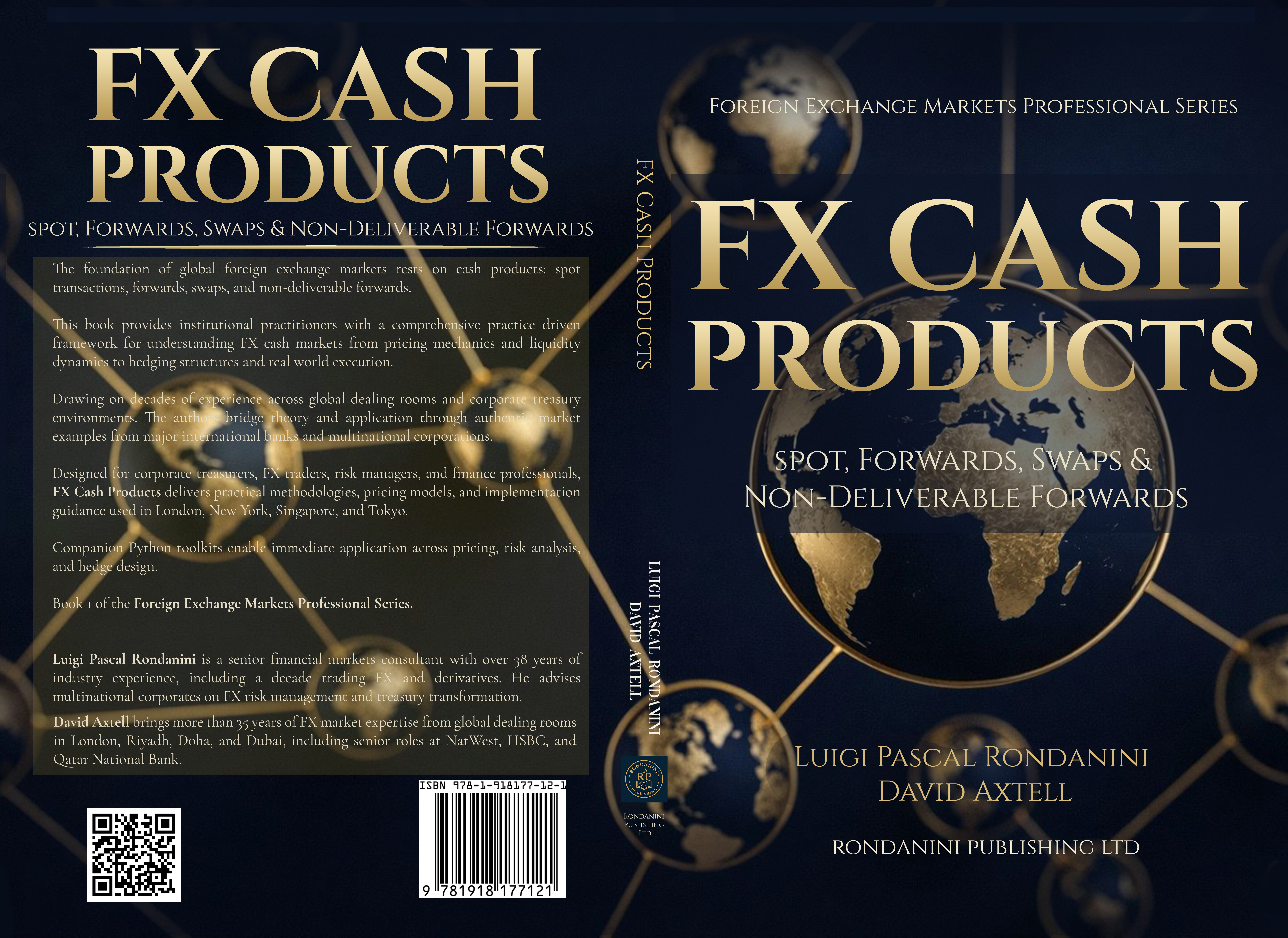
FX Cash Products: Spot, Forwards, Swaps & Non-Deliverable Forwards
Practitioner guide for treasury and markets
Luigi Pascal Rondanini · David Axtell · 2026 · Rondanini
Spot, forwards, swaps, and NDFs for corporate treasurers, traders, and risk managers—operations-first, institutionally framed.
- FX
- Treasury
- Risk management

Pricing and Trading Interest Rate Derivatives
A Practical Guide to Swaps
J. Hamish M. Darbyshire · 2022 · Aitch & Dee
A swaps trader’s bridge from curve building to book management: plain-vanilla and cross-currency IR swaps, risk, funding/CSA colour, and the distance between classroom models and how desks actually work. Third-edition material includes practical Python illustrations alongside the narrative.
- Fixed income
- Interest rates
- Derivatives

Modern Computational Finance
Scripting for Derivatives and xVA
Antoine Savine · Jesper Andreasen · 2021 · John Wiley & Sons
Second volume: building professional derivative scripting systems—cash-flow representation, branching, American Monte Carlo hooks, and how scripting supports xVA-style portfolio interrogation. Written for quant devs and library architects who must ship maintainable payoff DSLs.
- Derivatives
- Quantitative finance
- Risk management

Options, Futures, and Other Derivatives
Global edition
John C. Hull · 2021 · Pearson
The standard graduate-level derivatives text.
- Derivatives
- Risk management
- Quantitative finance